Why Cairo Tea Costs 10 Pounds on the Street and 110 in a Cafe
Key facts
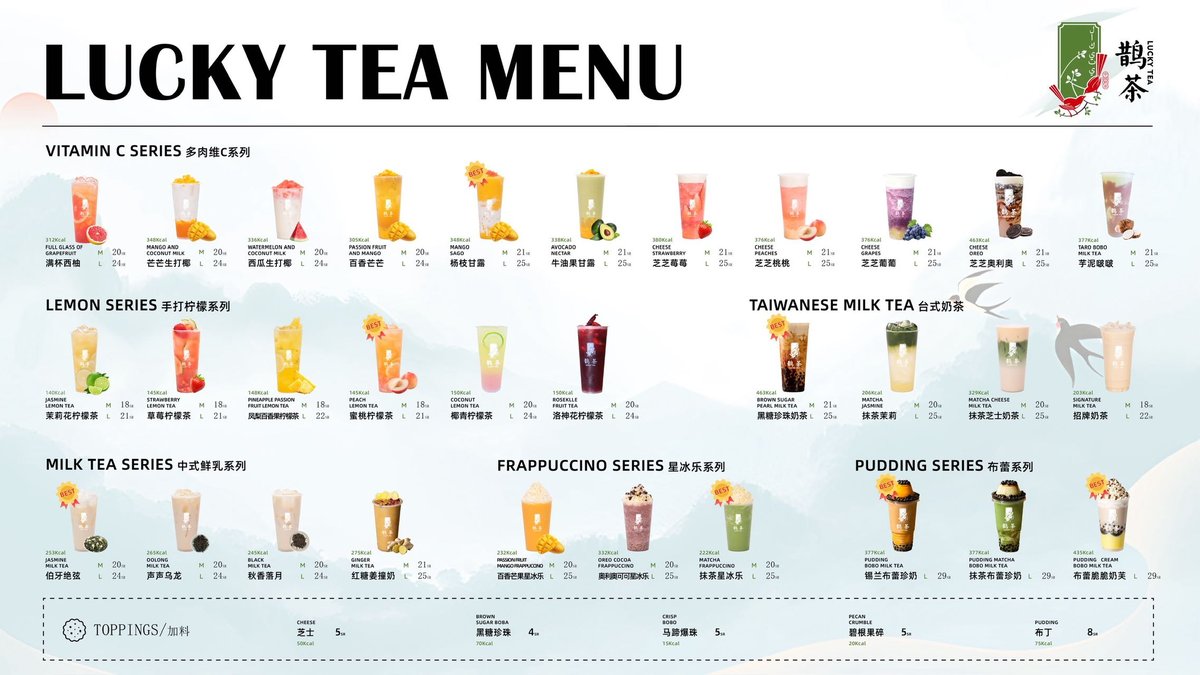
Milk tea menu design for a new market runs on four linked decisions, not one. Operators weigh localization against signature-flavor consistency, cap total SKU count for kitchen speed, anchor prices against what a market already pays for coffee or juice, and set a rotation cadence for seasonal drinks.
- Brinker International cut about 25 percent of Chili's menu items under a cross-utilization rule, where every new ingredient had to work across several dishes rather than one. Same-store sales rose 31 percent by the end of 2024 and operating margins climbed from 11.9 percent to 17.6 percent, according to menu-engineering platform meez.
- International expansion guidance from restaurant-technology firm Tillster recommends treating a small set of items as non-negotiable brand anchors while giving local teams flexibility on the rest, citing McDonald's India dropping beef for chicken and vegetarian options, and Burger King Japan adding the Teriyaki Whopper without touching its core lineup.
- Menu-pricing research compiled by restaurant platform DineCard describes price anchoring as placing one premium item well above the rest of a category so mid-tier drinks look like the sensible choice, a tactic distinct from simply raising prices market-wide.
What it means for the Gulf market
The Gulf sits in an unusual spot for milk tea brands weighing a launch: a young, multicultural population accustomed to global chains, alongside consumer tastes shaped by established Saudi and Emirati coffee and tea traditions rather than a boba culture already assumed as a baseline in East and Southeast Asia. A brand entering Riyadh, Jeddah, Dubai, or Cairo cannot simply port over an East Asian menu wholesale, nor should it reinvent the product line from zero.
The operational discipline that matters most here is the same one Tillster describes for any first-time market: decide early which two or three drinks are the brand's non-negotiable signature, then treat everything else as adjustable. Halal-certified ingredients and syrups are the baseline requirement across Saudi Arabia and the wider GCC, not an optional local tweak, and sweetness levels typically need to shift downward from some source-market defaults to match regional palates. Price anchoring also plays out differently in a market where a specialty coffee already commands a premium price. A milk tea brand entering Riyadh or Dubai is not pricing against boba competitors alone. It is pricing against the espresso bar and the juice counter next door, which sets a different anchor point than the brand's home market would suggest.
Background
SKU discipline became a louder theme in restaurant operations through 2026 as chains faced sustained ingredient and labor cost pressure. The logic borrowed by menu engineers from Chili's turnaround was cross-utilization: a new syrup or topping only earns a place on the menu if it can serve multiple drinks, not one signature item alone. For a milk tea brand opening in an unfamiliar market, this same principle keeps a first-location menu workable for a small kitchen crew and small store, before volume justifies expanding the topping list.
Seasonal rotation is the piece most often mismanaged by brands moving fast into a new market. Chains that update permanent items quarterly, and layer limited-time offers on a faster weekly or biweekly cadence, are using rotation to test what a new audience responds to without committing shelf space or supply-chain investment to it. In a market a brand has never operated in, an early rotation cadence doubles as market research, revealing which local-flavor experiments deserve to graduate into the permanent lineup and which were a one-time curiosity purchase.
None of these four levers, localization, SKU count, price anchoring, and seasonal rotation, work in isolation. A brand that localizes flavors but ignores SKU discipline ends up with a menu too complex for a new kitchen team to execute consistently. A brand that gets pricing right but skips rotation loses the ability to read what the new market actually wants beyond the opening lineup.
Takeaway
Milk tea menu design for a new market is less about invention and more about sequencing. Lock a small set of signature drinks as non-negotiable, localize the rest deliberately rather than wholesale, keep the opening SKU count low enough for a new kitchen to run cleanly, anchor prices against the market's existing coffee and tea culture rather than the brand's home pricing, and treat the first year of seasonal rotation as a live read on local taste. Brands that skip straight to a large, unfiltered menu in an unfamiliar market tend to spend their first year correcting course instead of building repeat customers.
Sources
- Tillster · International Restaurant Growth Guide: Tech, Menu and Branding · July 30, 2026
- meez · Menu Simplification: How Chili's Turned Fewer SKUs into a Comeback · June 23, 2026
- DineCard · Menu Price Anchoring: Use Decoy Items to Boost Sales · Updated July 2026