Milk Tea Menu Design: How Chains Decide What Stays and What Changes
Key facts
How bubble tea pearls are made comes down to one plant and one chemical reaction. Tapioca pearls start as starch extracted from the cassava root, mixed with hot water into a dough, rolled into small balls, then dried or sold fresh for boiling. The chewy "QQ" bite that defines good boba is not a matter of luck: it is the outcome of gelatinization, the process by which starch granules absorb water and swell under heat, combined with the ratio between two starch molecules, amylose and amylopectin.
Tapioca starch is roughly 82 percent amylopectin, a branched molecule that produces a soft, elastic gel, against a much smaller share of amylose, a straight-chain molecule that sets firmer and more rigid, according to Hong Kong Baptist University's chemistry department, which explains the reaction in its public food-chemistry series. That imbalance is why a properly cooked tapioca pearl stretches and springs back rather than crumbling.
Manufacturers can tune this further. Premium producers now engineer pearls with lower amylose content, around 13 to 15 percent versus 17 to 20 percent in commodity pearls, which extends how long the chew holds after cooking from roughly 2 to 3 hours to 4 to 6 hours, according to Taiwan-based ingredient supplier Yen Chuan's 2026 market outlook.
What it means for the Gulf market
Gulf tea shops, like most shops worldwide, buy tapioca pearls dry or frozen from suppliers rather than milling starch themselves, then finish the cooking process in house before service. That final cooking and holding step, not the ingredient list, is where most quality differences show up to a customer. A shop that batch-cooks small quantities through the day and holds pearls in syrup for a defined window serves a noticeably different texture than one that cooks once each morning and lets pearls sit for hours.
Freshness discipline matters more, not less, in a hot climate. Warm holding conditions accelerate both moisture loss and the starch reorganization that makes pearls go hard, so a shop that holds pearls too long can end up serving a stale bite even when the ingredients themselves were high quality at the point of purchase.
Background
Cooking sets the texture, and mishandling afterward undoes it. During boiling, tapioca starch first swells as amylose leaches out at lower heat, then amylopectin follows closer to boiling point, transforming the pearl's crystalline starch structure into the soft, translucent gel that defines boba, according to a Scientific American explainer on the chemistry behind homemade boba. Undercooked pearls stay chalky and firm at the center. Overcooked pearls turn soft and glutinous, losing the springy bite that "QQ," the Taiwanese term for that texture, describes.
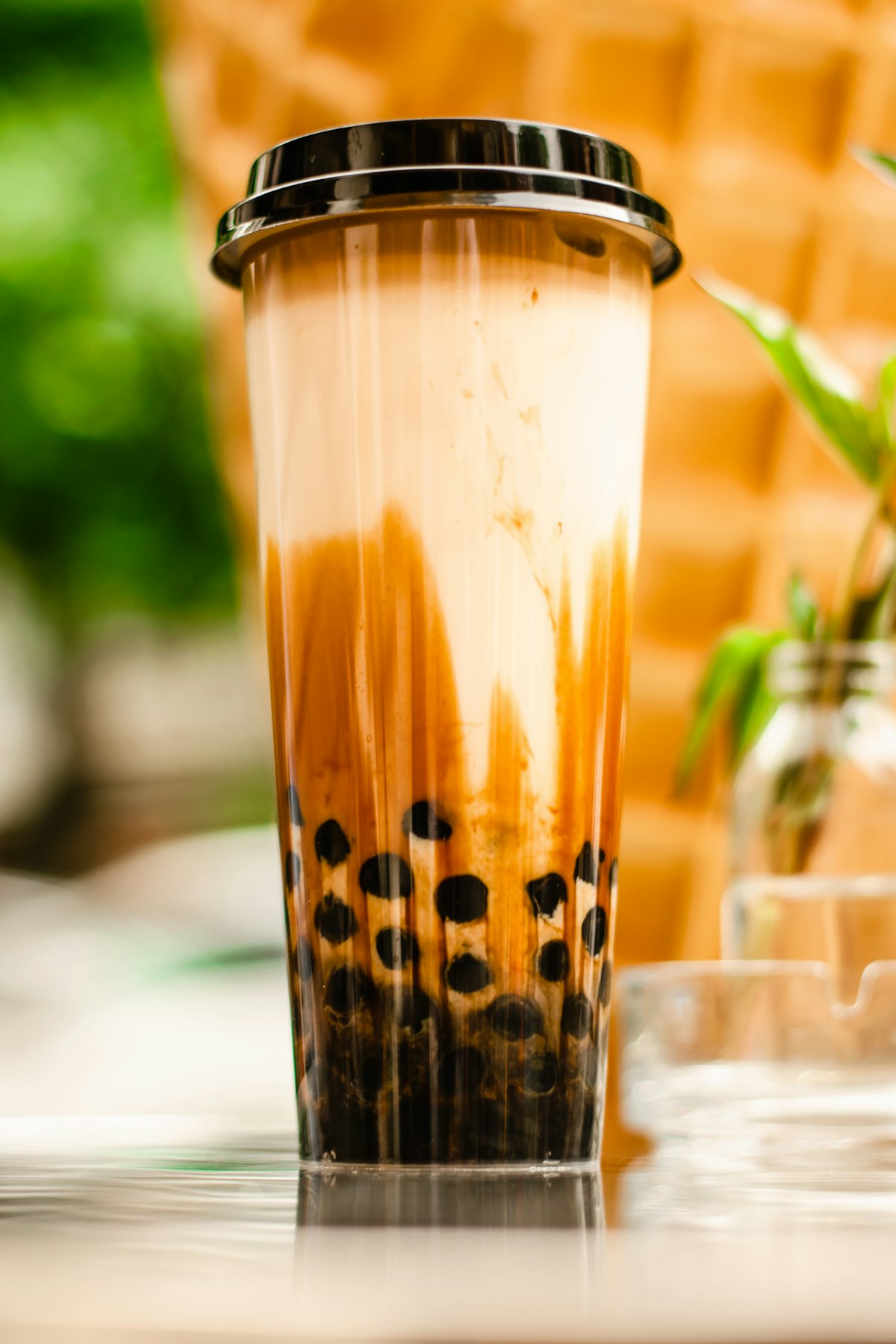
Freshly cooked pearls are typically finished in a sugar syrup bath, which does more than sweeten. The syrup acts as a humectant, slowing moisture loss from the pearl's surface and helping the gel structure hold its shape. Left too long regardless, tapioca starch undergoes retrogradation: as pearls cool and lose moisture, the amylose and amylopectin chains that gelatinization pulled apart begin re-forming ordered regions, producing a dense, rigid texture in place of the springy one. That is the chemistry behind a familiar complaint about boba that turns hard, rubbery, or unpleasantly mushy after sitting too long, whether in a shop's holding container or a to-go cup left on a counter.
This is also why quality-focused shops treat cooked pearls as a same-day, small-batch product rather than something to prepare once and store. Uncooked, dry tapioca pearls keep for months in a cool, dry environment, but once boiled, the window for peak texture runs in hours, not days.
Takeaway
A good tapioca pearl is a precise, repeatable piece of starch chemistry, not a fixed ingredient that behaves the same everywhere it is served. Amylose-to-amylopectin ratio, gelatinization temperature, and how long a batch sits after cooking all shape whether a customer gets the springy "QQ" chew boba is known for or a pearl that has already started to harden. For drinkers, the simplest quality signal is the one they can feel: a pearl that is soft, elastic, and holds its shape under a light bite has likely been cooked and served inside its freshness window, wherever in the world it is poured.
Sources
- Scientific American / Science Buddies · Make Boba for Bubble Tea · September 19, 2019
- Hong Kong Baptist University Chemistry Department · Gelatinization: The Secret of Pearls' Texture · Chemistry in Daily Life series
- Yen Chuan · 2026 Market Outlook: The Convergence of Indulgence and Functionality · January 18, 2026