China's Bubble Tea Industry Slowdown Sparks a Hunt for New Categories
Key facts
Saudi Arabia's tourism sector kept moving toward its Vision 2030 target of 150 million annual visitors through the first quarter of 2026, even as international arrivals slowed. Total visitor numbers reached 37.2 million for the quarter, up 8 percent year on year, according to tourism spending data reported by property consultancy Cavendish Maxwell. Domestic trips drove that growth, rising 16 percent to nearly 29 million and making up 78 percent of all visits, while international arrivals fell 13 percent to 8.3 million.
Tourist spending for the quarter reached SAR82.7 billion, about 22 billion US dollars. International visitors, though fewer in number, still generated close to 60 percent of that spending, evidence that longer-haul travelers continue to spend more per trip even as fewer of them arrive.
Hotel occupancy held at 61 percent for the quarter, only two percentage points below the prior year, according to figures from the General Authority for Statistics cited by AGBI. Hotels trimmed room rates by roughly 11 percent on average to keep rooms filled, and the number of licensed tourism hospitality facilities across the Kingdom grew 23 percent year on year, a sign that supply kept expanding even as the visitor mix shifted.
What it means for Riyadh
Vision 2030 planning still points to 150 million visitors a year by 2030, split roughly between 70 million from abroad and 80 million domestic trips. The 2026 numbers show that split tilting further toward domestic travel than planners may have expected, and Riyadh absorbs a large share of that movement, whether as a starting point, a stopover, or a destination on its own.
For cafes in the capital, more domestic travel means more people moving through neighborhoods on weekends and holidays who are not necessarily locals of that district. A family visiting Riyadh from Jeddah or the Eastern Province, or a Riyadh resident exploring a different part of the city instead of booking a flight abroad, both show up the same way at street level, as new footfall in cafes near hotels, malls and family destinations.
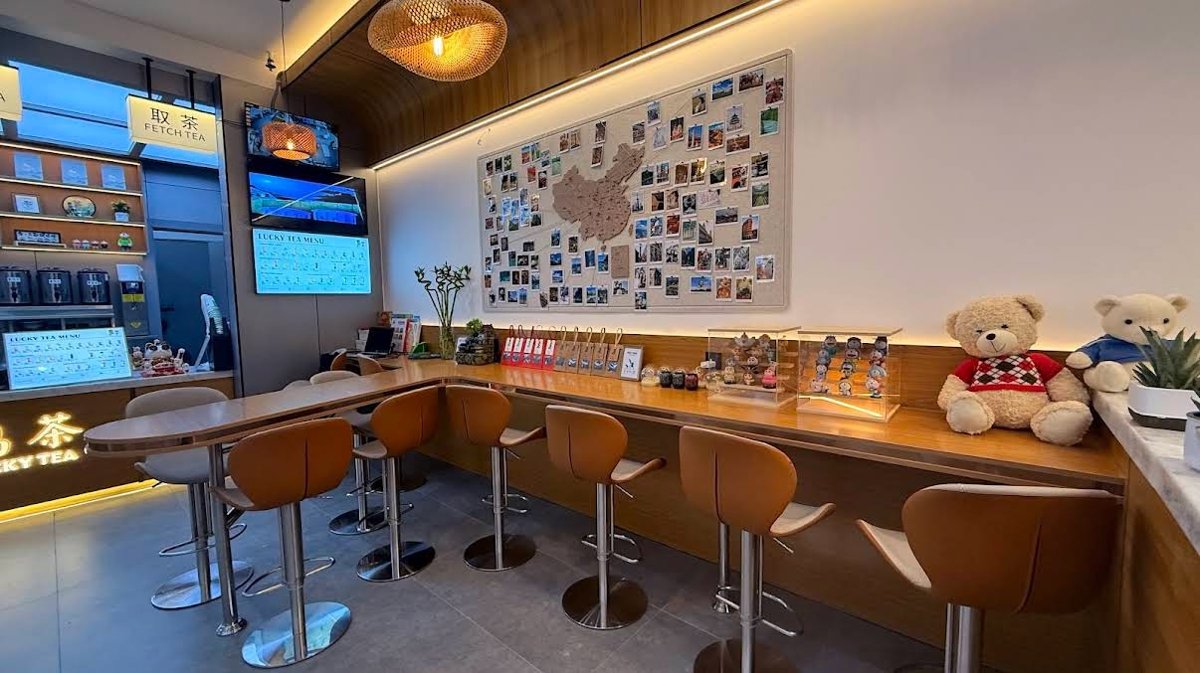
Lucky Tea's three Riyadh locations sit inside that everyday-plus-visitor mix. The Lucky Tea Al Hamra store serves a residential, family-oriented district that suits travelers staying with relatives or in nearby serviced apartments. The Lucky Tea Ar Rabi Square store, in the city's north, draws a younger, more mobile crowd, including domestic travelers on weekend trips. The Lucky Tea Abdallah Ibn Soleiman Al Hamadani store, on a central commercial street, sees the kind of weekday foot traffic that includes business travelers passing through the capital as part of a longer domestic or international itinerary.
Background
Saudi Arabia's tourism target has moved twice in recent years. The Kingdom originally set a goal of 100 million annual visitors under Vision 2030, then passed that mark in 2023, six years ahead of schedule. The target was raised afterward to 150 million visitors a year by 2030, and officials pointed to a 2025 total of about 122 million visitors, a 5 percent increase over 2024, as evidence the higher goal was within reach. Tourism now contributes an estimated 5 percent of Saudi Arabia's GDP.
2026 has tested that trajectory. Tourism Minister Ahmed Al-Khateeb has said sector activity slowed by 5 to 6 percent in the first five months of the year, a dip he linked to regional disruption connected to the conflict with Iran, which affected airline routing and travel confidence across parts of the Middle East. Even so, he pointed to domestic tourism, which he said made up roughly 60 percent of activity, as the sector's stabilizer, alongside steady demand from religious travel to Makkah and Madinah. By July, industry analysts were describing regional security conditions as more settled than earlier in the year, with easing airfare pressure expected to support a gradual recovery in international arrivals through the rest of 2026.
Takeaway
Saudi Arabia is not yet at 150 million visitors, but the direction of travel has held even through a difficult stretch for regional tourism, largely because domestic trips have picked up the slack left by fewer visitors from abroad. For Riyadh's cafe scene, that means the customer walking in on a weekend afternoon is increasingly likely to be a domestic traveler rather than a purely local regular, a shift that rewards cafes, including tea shops like Lucky Tea, that are easy to find near where people are already staying, working or passing through.
Sources
- AGBI · Saudi room occupancy holds steady as hotels slash prices · July 6, 2026
- Gulf Tech News · Tourist spend in Saudi Arabia reaches SAR82.7 billion as Q1 guest numbers grow to 37.2 million (Cavendish Maxwell) · June 23, 2026
- GCC Business Watch · Saudi Arabia surpasses 122 million tourists in 2025, accelerating towards Vision 2030 goals · January 22, 2026
- Investing.com · Saudi Arabia tourism drops up to 6 percent in early 2026 amid Iran war · June 18, 2026