Singapore's Bubble Tea Advertising Ban Is Not as New as the Internet Thinks
Key facts
Chinese tea and Middle East hospitality built the same social rule from opposite ends of Asia, using two drinks that share almost nothing except the guest they are poured for. Arabic coffee culture, prepared as qahwa or gahwa across Saudi Arabia, the United Arab Emirates, Oman and Qatar, was inscribed on UNESCO's Representative List of the Intangible Cultural Heritage of Humanity in 2015 and extended in 2024 to include Jordan, under the title "Arabic coffee, a symbol of generosity." The listing describes a precise etiquette: older people and guests are served first, coffee is poured with the right hand from a narrow-spouted pot called a dallah into small handleless cups called finjan, and a guest signals they have had enough by gently shaking the empty cup.
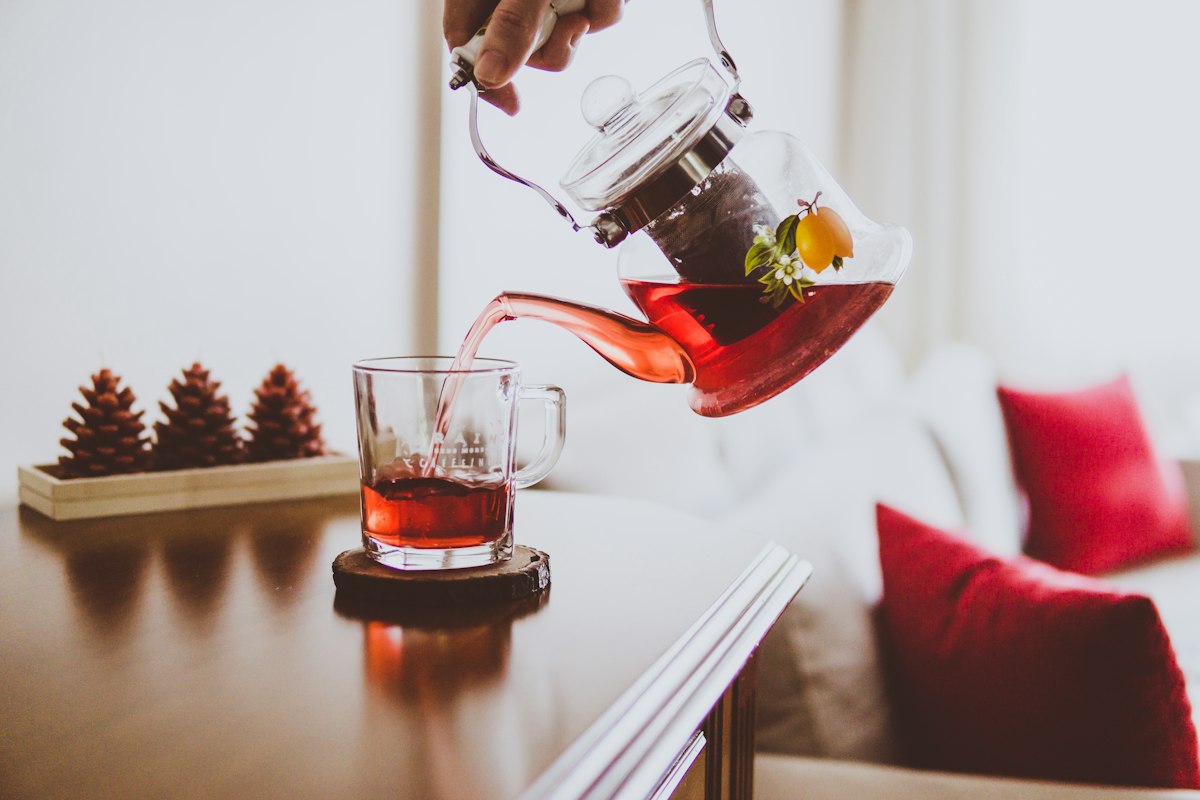
On the other end of the trade routes, Chaozhou-style gongfu cha treats pouring tea for a visitor the same way. Reporting on the practice describes three cups traditionally arranged in a triangle, one for the host and two for guests, with the final drops of each round distributed evenly between them so that no cup gets a stronger or weaker pour, a gesture meant to embody fairness and consideration for others. Cups are rinsed with hot water between rounds before being refilled. In 2022, UNESCO inscribed Chinese tea processing techniques and their associated social practices, gongfu cha among them, on the same Intangible Cultural Heritage list.
What it means across the Gulf
Across Gulf homes and majlis gatherings, the tools differ from a Chinese tea room, but the sequence does not: a guest arrives, and before conversation or business begins in earnest, a drink appears. The muqahwi, the person serving the coffee, traditionally stays standing, holding the dallah in one hand and a stack of cups in the other, until every guest has finished. That same instinct, offer a drink before anything else, is what a Chaozhou host is doing when the first poured cup goes to the visitor rather than to themselves. The plants and the pots are unrelated; the social logic is not.
The overlap goes beyond who gets served first. Both rituals favor several small pours over one large serving, a pattern that stretches a visit into multiple rounds of pouring and conversation rather than a single drink and a quick goodbye. A Gulf household refilling small cups of gahwa through an afternoon majlis and a Chaozhou household refilling a guest's tiny cup a dozen times over the same stretch of time are, in practice, running a near-identical hospitality script with different ingredients. It is one reason Chinese-style tea shops have found a welcome audience in Riyadh, Jeddah, Dubai and other Gulf cities in recent years. The format is new to the region, but the underlying courtesy it is built on is not.
Background
The two rituals were never copied from one another. Coffee's path into Gulf hospitality traces back to the Horn of Africa and Yemen, where the bean was first cultivated and traded before becoming the centerpiece of Arabian social life, a lineage UNESCO's listing traces explicitly through the Arabian Peninsula states that jointly nominated it. Tea's path runs in the opposite direction, moving west out of China across the overland and maritime trade networks historians group together as the Silk Road, through Central Asia and Persia and, over centuries, into the Arabian Peninsula.
What the two trade histories share is contact, not origin. For as long as caravans and ships carried tea west while coffee moved through Arab ports and inland routes, the merchants, pilgrims and travelers who used those roads also carried customs, including the belief that offering a guest something to drink is one of the first duties a host owes. Two separate plants, two separate domestication stories, two different points of origin an ocean and a continent apart, and the resulting etiquette, served first to the eldest or most honored guest, offered before conversation begins, treated as a measure of the host's character, reads as close to interchangeable today.
Takeaway
The vessel is different, the plant is different, and the flavor shares nothing, cardamom and bitterness on one side, something closer to floral and vegetal on the other. But the rule a Riyadh majlis and a Chaozhou tea room both inherited from centuries of trade along routes linking China to the Arabian Peninsula is the same one: the guest is served before anything else happens. That shared instinct, carried along the Silk Road in both directions long before either drink had a name for it, is the real meeting point between Chinese tea and Middle East hospitality.
Sources
- UNESCO Intangible Cultural Heritage Lists - "Arabic coffee, a symbol of generosity" · inscribed 2015, extended 2024
- Khaleej Times - "This is the proper, traditional way to drink Arabic coffee" · published 11 May 2017, updated 27 September 2022
- China Daily via Asia News Network - "Chaozhou gongfu cha: A tea-drinking practice steeped in Chinese tradition" · 30 December 2025