China's Bubble Tea Industry Slowdown Sparks a Hunt for New Categories
Key facts
- The Royal Commission for Riyadh City, working with the Ministry of Human Resources and Social Development, rolled out a flexible working hours initiative on June 2, 2026, covering more than 50 government entities across six business zones: King Abdullah Financial District, Digital City, the Diplomatic Quarter, Laysen Valley, Granada Business Park and Roshn Front.
- Entities under the Civil Service System can now start between 5:30am and 9:30am, while those under the Labor Law can start between 7am and 11am, staggering commutes instead of fixing one shared start time.
- Saudi Arabia's coworking sector has grown to more than 250 spaces nationwide, up from roughly 40 in 2018, and Monsha'at, the Small and Medium Enterprises General Authority, had licensed 273 accelerators, incubators and coworking facilities by mid-2025.
- Riyadh holds the largest share of that inventory, concentrated around King Abdullah Financial District, Al Olaya and the Anas Ibn Malik Road corridor, alongside independent cafes that have become known informally as good places to work with a laptop.
What it means for Riyadh
Coworking cafe Riyadh searches have become common for a reason: as staggered hours and hybrid contracts spread through the capital's offices, the workday itself has stopped meaning one fixed desk from nine to five. A morning that starts anywhere between 5:30am and 11am, depending on the employer, leaves gaps that used to be spent commuting. Many residents now fill those gaps with a coffee shop or tea house table, a laptop, and a stable wifi connection.
This shows up most clearly around districts with heavy weekday office traffic. Near Ar Rabi Square in north Riyadh, young professionals working flexible or hybrid schedules often move between meetings and a nearby cafe rather than a formal desk. Along the commercial corridors near Abdallah Ibn Soleiman Al Hamadani Street, the same pattern holds for staff whose midday breaks now stretch long enough for an hour of independent work between appointments.
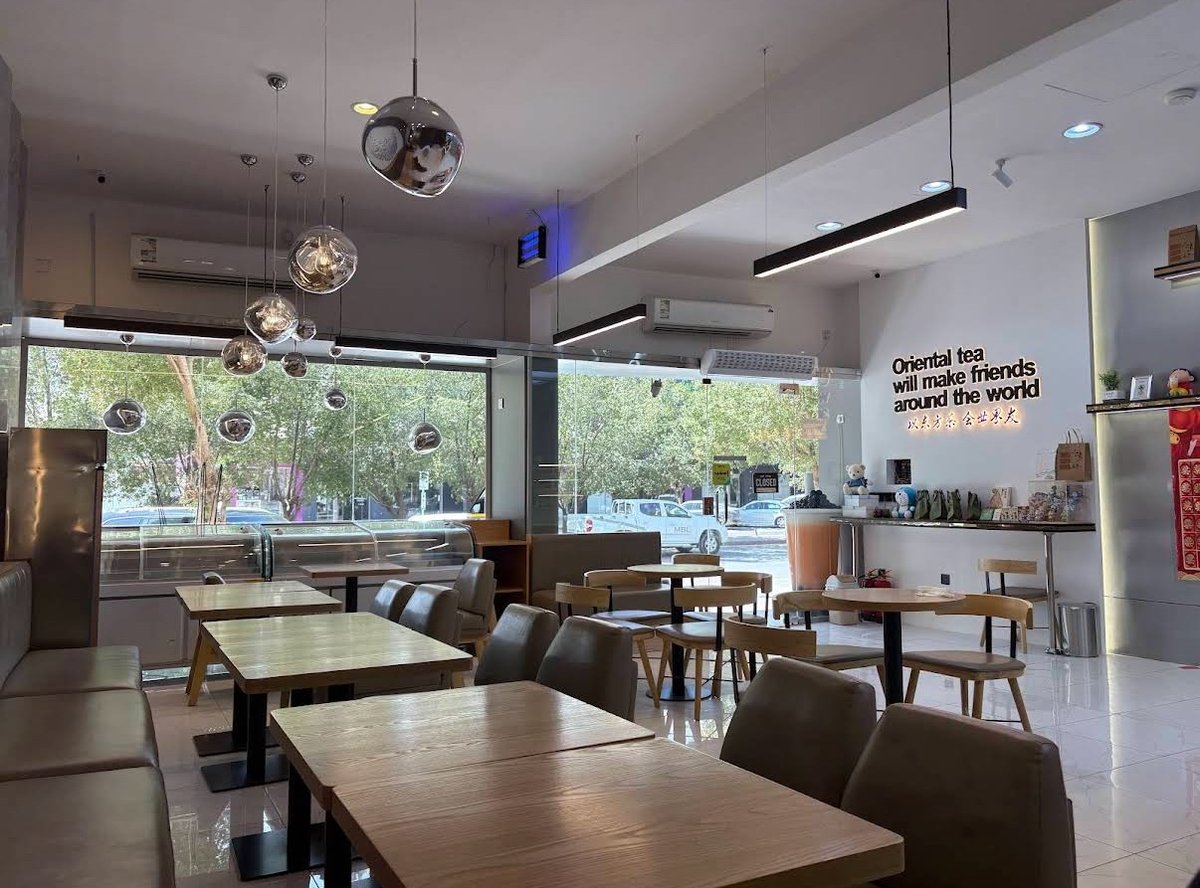
A handful of Riyadh cafes have built a reputation specifically around this habit, from library-style spots that rent desks by the hour to open, naturally lit rooms designed for long sits over a single order. It is worth noting this remains an informal habit, not a service category. Not every cafe wants a laptop occupying a table for two hours during a lunch rush, and some limit seating time or outlet access at peak hours. Riyadh's dedicated coworking operators, from Executive Centre's King Abdullah Financial District locations to smaller hubs like Beehive and AstroLabs, exist precisely to formalize what cafes offer only casually.
Background
The cafe has long functioned as a social middle ground in Saudi life, a place between home and work where conversation, reading and now remote work all coexist. Riyadh's specialty coffee scene, which expanded rapidly over the past several years, gave that tradition a modern, design-forward home, and it is this generation of cafes, rather than large chains alone, that tends to attract the laptop crowd.
The push toward flexible schedules is also structural. Vision 2030's broader shift toward a knowledge-based, diversified economy has increased the number of Riyadh residents working in sectors such as IT, consulting, digital marketing and finance, jobs that are easier to perform outside a fixed office than manufacturing or retail roles are. Government-backed support for accelerators and incubators through Monsha'at has run in parallel, giving startups and freelancers formal coworking options even as informal cafe work has grown alongside them. The result is a capital where a growing share of the working week no longer happens at a single fixed address, whether that means a staggered office start time, a rented desk, or a cafe table.
Takeaway
Riyadh's workday is loosening in two directions at once: government entities are formally staggering office hours, and a fast-growing coworking sector is giving freelancers and hybrid staff dedicated desks. Between those two shifts sits the ordinary cafe table, wifi password and a pot of tea, which for a growing number of Riyadh's workforce has become a perfectly functional stand-in for an office chair.